


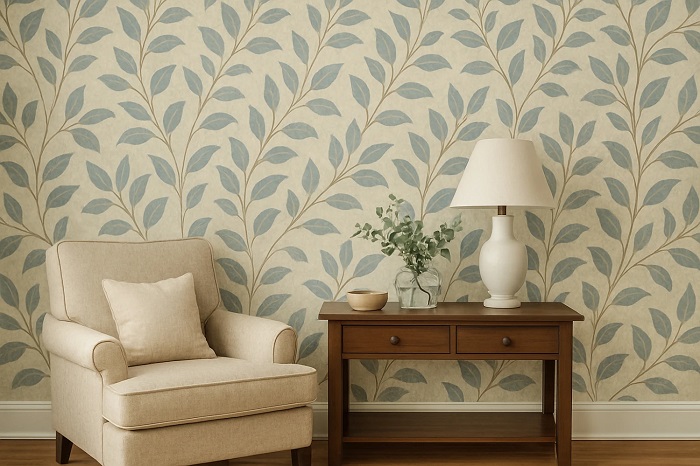
21 Dec Why wallpaper is making a strong comeback in contemporary interior design
Wallpaper has re-entered the spotlight in modern interior design—not as a nostalgic element, but as a highly adaptable architectural surface. Today’s designers and homeowners increasingly view wallpaper as a tool for shaping atmosphere, adding depth, and emphasizing spatial identity rather than simply decorating walls.
This renewed interest is driven by advancements in materials, printing technologies, and installation methods, which together have transformed wallpaper into a refined and durable design solution suitable for a wide range of residential interiors.
The Shift from Decoration to Architectural Surface
Historically, wallpaper was treated as a decorative layer applied after design decisions were made. In contemporary practice, it is increasingly considered earlier in the design process, alongside lighting, textures, and spatial planning.
Modern wallpapers offer:
- dimensional textures that interact with light,
- large-scale patterns that influence perceived room proportions,
- and materials engineered for durability and longevity.
As a result, wallpaper now functions as an architectural surface rather than a purely ornamental finish.
Material Innovation and Performance Improvements
One of the main reasons wallpaper has regained relevance is the evolution of materials. Today’s wallcoverings are engineered to perform under real-world conditions, including fluctuating humidity, temperature changes, and varying wall substrates.
Popular modern options include:
- vinyl-based wallpapers for high-use areas,
- non-woven materials that allow walls to breathe,
- and natural fiber wallcoverings used selectively for visual depth.
These improvements have significantly reduced issues traditionally associated with wallpaper, such as peeling, bubbling, or premature wear.
The Importance of Proper Surface Preparation
Despite material advancements, the success of wallpaper installation still depends heavily on surface preparation. Even premium wallcoverings can fail if applied to improperly prepared walls.
According to Kris A., an interior design consultant who works closely with residential wall finish projects across the Denver metro area, preparation is often underestimated.
“In real projects, we often see that wallpaper issues are blamed on the material, when the actual cause is insufficient wall preparation. Surface flatness, priming, and compatibility with the chosen wallpaper are critical—especially in regions with changing climate conditions,” she explains.
This perspective reflects a broader industry understanding that installation quality plays a decisive role in long-term performance.
Climate and Regional Considerations in Wallpaper Use
Regional climate conditions influence how wallcoverings behave over time. Factors such as dry air, seasonal temperature swings, and building envelope design all affect adhesion and material stability.
In regions where homes experience significant environmental variation, professional installation methods become particularly important. Experienced installers account for substrate conditions, moisture levels, and material behavior to ensure reliable results.
For homeowners interested in learning more about how professional wallpaper installation is approached in real residential projects, Get more details here.
Wallpaper as a Design Tool for Visual Balance
Beyond performance, wallpaper plays a powerful role in shaping how spaces are perceived. Designers often use wallpaper to:
- visually expand or compress rooms,
- define focal walls without structural changes,
- or introduce contrast in otherwise minimal interiors.
Unlike paint, wallpaper can introduce pattern, texture, and depth simultaneously, making it especially effective in spaces where architectural elements are limited.
A Long-Term Perspective on Wall Finishes
As interior design continues to emphasize longevity and thoughtful material selection, wallpaper is increasingly viewed as a long-term surface rather than a temporary trend. When paired with proper preparation and professional installation, modern wallcoverings can maintain their appearance and performance for many years.
This shift reflects a broader move toward intentional design—where materials are selected not only for aesthetics, but also for how they interact with the space over time.
No Comments