


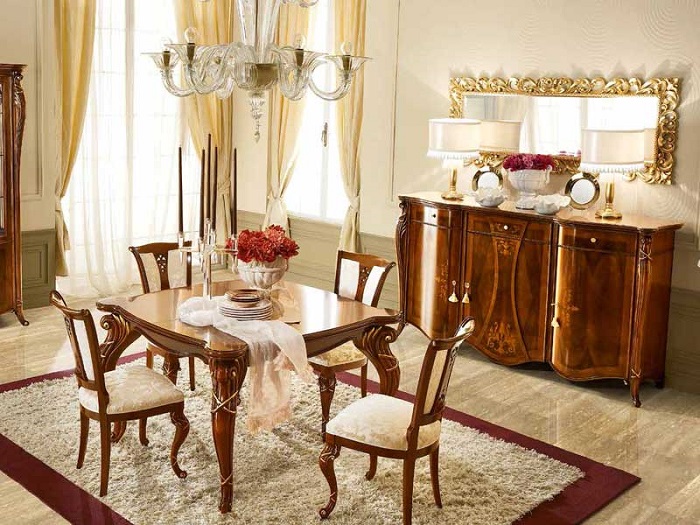
13 Oct Why Italian craftsmanship remains the benchmark of furniture excellence
“Made in Italy” is not a nostalgic slogan. In the world of high-end furniture, it remains a living system of values, skills, and decisions that continue to shape how luxury interiors are designed, produced, and experienced today. At a time when global manufacturing has never been faster or more fragmented, Italian origin still functions as a meaningful marker of quality, restraint, and cultural depth.
Luxury buyers are no longer impressed by scale alone. They look for coherence, traceability, and objects that feel grounded in something real. Italian furniture responds to that demand not by chasing trends, but by refining a long-standing dialogue between craft, industry, and design intelligence.
SayRUG.eu offers a useful reference point for how contemporary Italian design values are translated into textiles and interior elements that prioritize material honesty and design clarity rather than excess.
The Shift From Status to Substance
For decades, luxury furniture signaled wealth through visibility. Bigger forms, louder finishes, and recognizable logos dominated elite interiors. That language has quietly changed.
Today’s high-end consumer is more informed and more selective. They ask different questions:
- Where was this piece made?
- Who designed it?
- How long will it last, aesthetically and physically?
- Can it age with dignity?
Italian furniture has adapted naturally to this shift because its value system was never built on spectacle. It was built on proportion, material intelligence, and respect for process.
“True luxury is not what demands attention, but what continues to reward attention over time.”
Italy as a Design Ecosystem, Not a Factory
One of the most misunderstood aspects of the “Made in Italy” label is the assumption that it refers only to geography. In reality, it describes an ecosystem.
Italian furniture production is deeply regional. Different areas specialize in different skills:
- Brianza for cabinetry and architectural furniture
- Veneto for upholstery and woodworking
- Tuscany for leather craftsmanship
- Como for textiles and surface innovation
These regions are not isolated suppliers. They operate in close collaboration with designers, engineers, and material researchers. This proximity allows ideas to move quickly from sketch to prototype, and from prototype to refinement, without losing intention along the way.
In contrast, many globalized production models separate design, sampling, and manufacturing across continents. The result may be efficient, but it often lacks cohesion.
Design Culture Over Decoration
Italian high-end furniture rarely relies on ornament for its appeal. Its strength lies in how form and function are negotiated.
Italian designers are trained to think architecturally. A chair is not an isolated object, but part of a spatial system. A table is not a statement piece, but a structural anchor within a room.
This mindset produces furniture that:
- Integrates easily into diverse interiors
- Balances visual calm with tactile richness
- Feels intentional rather than excessive
That is why Italian pieces often appear understated in photographs, yet reveal their complexity in person. The value is not immediate impact, but long-term relevance.
Materials That Are Chosen, Not Marketed
Another reason origin still matters is material discipline. Italian manufacturers tend to work with a limited but deeply understood palette.
Wood is selected not only for grain, but for stability over decades. Metals are chosen for how they patinate rather than how they shine on delivery day. Textiles are tested for how they respond to light, friction, and daily use.
This approach contrasts with trend-driven production, where materials are often chosen for short-term visual appeal.
In Italian high-end furniture, material choice is a design decision, not a marketing one.
The Quiet Role of Time
Time is an invisible ingredient in Italian furniture.
Many production processes deliberately resist acceleration. Drying cycles, finishing layers, and manual assembly are paced according to material behavior rather than commercial urgency.
This patience has practical consequences:
- Better structural integrity
- More consistent finishes
- Lower long-term maintenance
It also has aesthetic consequences. Furniture that is not rushed tends to feel composed. Edges are softer. Transitions are smoother. Proportions feel resolved.
“Speed can produce objects. Time produces furniture.”
Italian Origin in a Global Market
Does Italian furniture still matter when luxury brands sell worldwide? The answer lies in differentiation.
As global markets become visually homogenized, origin becomes one of the few remaining sources of identity. Italian furniture does not try to look universal. It looks Italian, in the best sense of the word.
That means:
- A preference for balance over boldness
- An understanding of negative space
- A dialogue between tradition and restraint
This identity resonates especially with architects and interior designers who value coherence over novelty.
Craftsmanship Without Nostalgia
Italian high-end furniture is often associated with craftsmanship, but not in a sentimental way.
Craft here is not about preserving old methods unchanged. It is about knowing when the hand is better than the machine, and when technology can enhance precision without erasing character.
CNC cutting, digital modeling, and advanced material testing are widely used. What distinguishes Italian production is that these tools serve design intent rather than replace it.
The result is furniture that feels human without being rustic, precise without being sterile.
Sustainability as Continuity
While sustainability is now a global conversation, Italian furniture has long practiced a form of environmental responsibility rooted in longevity.
Furniture designed to last 30 or 50 years inherently reduces waste. Repairability, modular construction, and material honesty all contribute to a quieter, more durable sustainability model.
This approach is less visible than certifications or slogans, but often more effective.
Why Clients Still Ask “Is It Italian?”
In showrooms, studios, and private commissions, the question persists.
Not because Italy guarantees perfection, but because it signals a certain philosophy:
- Design before decoration
- Process before speed
- Integrity before volume
For high-end clients, these values matter more than ever. They want fewer objects, but better ones. Objects that feel anchored rather than replaceable.
Origin as a Design Decision
“Made in Italy” is no longer about national pride. It is about choice.
Choosing to work within a system that respects materials, time, and design intelligence. Choosing furniture that does not shout its value, but proves it quietly, year after year.
In an industry increasingly driven by speed and replication, Italian origin remains relevant precisely because it refuses to compete on those terms.
It competes on meaning.
No Comments