


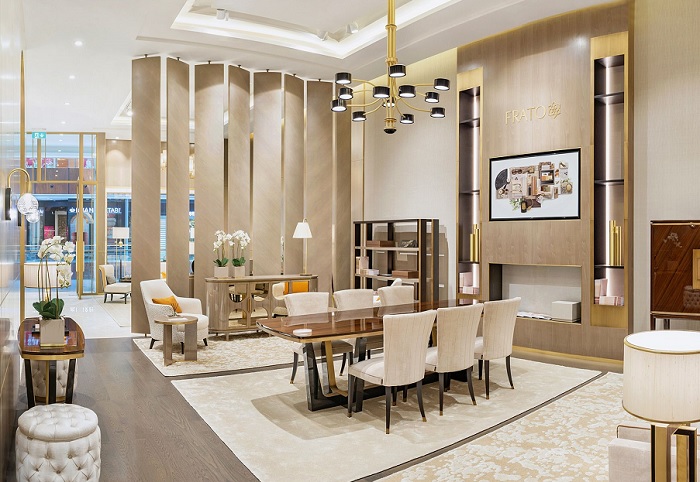
25 Jan Flagship stores of luxury interior brands in 2026
In 2026 the landscape of luxury interior design retail is no longer defined solely by exquisite products. Flagship stores have become immersive cultural spaces where architecture, brand narrative, and community converge. In this article we explore how leading luxury interior brands are redefining the flagship store concept in 2026, providing inspirations for designers, collectors, and curious travelers alike.
As real estate costs rise and digital experiences become richer, the flagship store remains a beacon of physical brand identity. These spaces are curated to showcase craftsmanship and to offer a tangible connection to the story behind each product. They are cultural hubs. They are destinations.
Highlights
- Flagship stores as cultural platforms
- Integration of digital and physical exploration
- Urban versus destination flagship strategies
- Examples from market-leading brands in 2026
- The future: sustainability, customization, and community
The New Flagship Paradigm: Beyond Retail
In the past, a flagship store was thought of as the largest boutique in a major city, stocked with the most complete product assortment. In 2026 that definition seems quaint. Now, flagship stores are:
- Storytelling environments where brand philosophy meets spatial design.
- Experiential hubs that offer workshops, curated exhibitions, or events.
- Integration points between digital configurations (AR visualizers, VR tours) and the physical showroom.
Luxury interior brands are investing in narrative richness. Rather than simply showcasing furniture or decor, the flagship becomes an editorial canvas. Visitors might discover a newly commissioned artwork, attend a design talk, or participate in a material workshop that reveals how a handcrafted rug or ceramic object is made.
For instance, companies like SAYRUG highlight the importance of cultural context in their displays, blending artisanal storytelling with global design trends.
How Flagships Integrate Digital and Physical Experience
Digital technologies are not replacing physical spaces; they are enhancing them. A grown trend in 2026 is the seamless integration of digital tools into the flagship experience:
- Augmented reality samples where guests can visualize how a piece looks at scale within a virtual setup.
- Interactive product histories displayed through touchscreen tables or projection walls.
- Virtual consultations with design specialists in premium brands’ headquarters, accessible from flagship locations.
This reflects a new retail reality: online browsing remains critical to research and discovery, while physical flagships provide irreplaceable sensory engagement. A sofa’s upholstery, the tri-dimensional texture of a rug, or the weight of a handblown glass vase all demand physical presence. Digital layers make this exploration richer, not redundant.
Urban Icons and Destination Flagships
Flagship stores in 2026 fall broadly into two strategic categories:
- Urban icons in major global cities like New York, London, Paris, Tokyo, and Dubai. These are highly visible, architecturally forward, and curated to attract both design professionals and affluent local customers.
- Destination flagships nestled in design districts or cultural quarters, drawing tourists and design enthusiasts specifically to the brand’s world.
The urban icon is about brand halo and daily visibility. It often occupies heritage buildings or contemporary landmarks. These are spaces where international travelers and local tastemakers intersect. They often host special events during design weeks or cultural festivals.
Destination flagships tend to be larger, more immersive, and sometimes located outside the primary high-street footprint. They can be part showrooms, part galleries, and part experience venues. They invite longer visits and deeper engagement with brand philosophy and product craft.
Case Studies: Interior Brands Leading the Flagship Revolution
The following case studies illustrate how flagship stores have evolved by 2026:
1. A Maison of Craft and Architecture
A leading European interior brand (anonymous for editorial focus) opened its flagship in a restored industrial complex in a major cultural city. The space was conceived not just as a showroom but as a chronicle of materials and techniques. Visitors enter through an atrium that showcases large-format stone, lacquered wood, and textile installations. Rotating exhibitions spotlight collaborations with artisans across metal, glass, and fiber arts.
The design integrates an amphitheater for lectures and workshops. Digital stations allow guests to explore global ateliers and view product journeys from concept to completion. This flagship is a research hub for students and professionals alike, embedding the brand within the broader cultural discourse of design.
2. Tech-Enabled Galleries in Tokyo
In Tokyo, a flagship store blends minimalist architecture with interactive digital curation. The space uses projection mapping to reinterpret product stories throughout the day. At night, ambient lighting and spatial soundscapes transform the gallery into a contemplative environment.
Visitors can engage with virtual design assistants who use AI to refine preferences and suggest configurations in real time. Integrating these digital tools with calm, physical spaces creates a unique rhythm that mirrors the city’s blend of innovation and tradition.
3. Boutique Flagship in Dubai’s Design District
A Middle Eastern flagship nestled in Dubai’s bustling design district emphasizes cultural dialogue. The store is curated like a boutique museum, with art installations and limited-edition collections. Collaborative events with regional artists and designers reinforce the brand’s role as a cultural connector.
Here, visitors can schedule private tours that trace design influences from East Africa to South Asia. Augmented reality portals allow guests to envision how bespoke lighting and rugs transform interiors, bridging global styles with local aesthetics.
Flagship Programming: Events, Community, and Education
In 2026 the most successful flagships are not static showrooms but dynamic environments with ongoing programming. Some common elements include:
- Design talks and panels featuring leading architects, critics, and artists.
- Material workshops that explore traditional techniques like weaving, marquetry, and ceramics.
- Pop-up collaborations with emerging brands and creatives.
- Seasonal exhibitions that introduce thematic collections or reinterpretations of classic pieces.
Flagship venues have become cultural calendars unto themselves. Local communities engage with these spaces not only as consumers but as participants in dialogue and creation.
Custom Spaces: Personalization Meets Flagship Experience
One of the strongest trends in 2026 is advanced personalization. Flagship stores now offer customization studios where clients can co-design pieces with artisans. Instead of simply selecting options from a catalog, customers collaborate in real time with design consultants and craftsmen. This process might include:
- Selecting materials sourced from specific regions
- Embedding personal narratives into bespoke designs
- Previewing custom work through immersive digital models
This shift reflects a broader move in luxury retail towards co-creation and ownership of the design journey. A customer’s signature piece becomes a story unto itself, a product with deep personal meaning.
Sustainability and Ethical Craft in Flagship Design
Environmental stewardship and social responsibility are now essential parts of flagship narratives. Forward-thinking brands in 2026 emphasize sustainability in both products and spaces:
- Climate-conscious materials are highlighted through educational displays.
- Energy-efficient lighting and climate control are integral to architectural design.
- Transparency about supply chains is incorporated into digital storytelling walls.
Flagship stores are now places where visitors learn why certain woods are sourced sustainably, how dyes are plant-based, or how artisans are compensated fairly. This ethos is no longer optional; it is expected by an informed audience.
Global Flagships: Balancing Local Culture and Universal Identity
While global brands maintain a consistent identity, their flagships in different cities interpret that identity through local cultural lenses. For example:
- A Paris flagship might evoke classical heritage with curated historical references.
- A Seoul flagship might emphasize minimalism fused with digital interaction.
- A Milan flagship could integrate elements of fashion and industrial design traditions.
This balance between local expression and global DNA is crucial. It acknowledges regional design histories while reinforcing the brand’s larger narrative.
Concluding Thoughts: The Future of Flagship Stores
Flagship stores in 2026 are dynamic, multifaceted, and deeply experiential. The most compelling flagship spaces act as:
- Cultural forums where ideas are exchanged and creativity is celebrated.
- Educational environments that reveal craft and material stories.
- Creative studios where brands and customers co-author design work.
The role of the flagship store has shifted from transactional to transformational. It is no longer about selling products as isolated objects. It is about offering a holistic experience that bridges history, craft, digital innovation, and human connection. In this reimagined landscape, each flagship becomes a narrative space: open, engaging, and alive with possibilities.
No Comments